


 Global








As a critical human-machine interface, the stability of the automotive Head-Up Display (HUD) is directly related to driving safety and user experience. With the evolution of vehicle electronic architecture towards domain centralization, HUD systems integrate high-speed video interfaces, complex power management units, and high-precision sensors. Their operating environment faces dual electromagnetic threats from the vehicle's own electrical system (such as load dump, inductive load switching) and the external environment (such as electrostatic discharge, RF interference). Ensuring stable imaging, no flicker, and no data errors in harsh Electromagnetic Compatibility (EMC) environments has become one of the core challenges in hardware design.
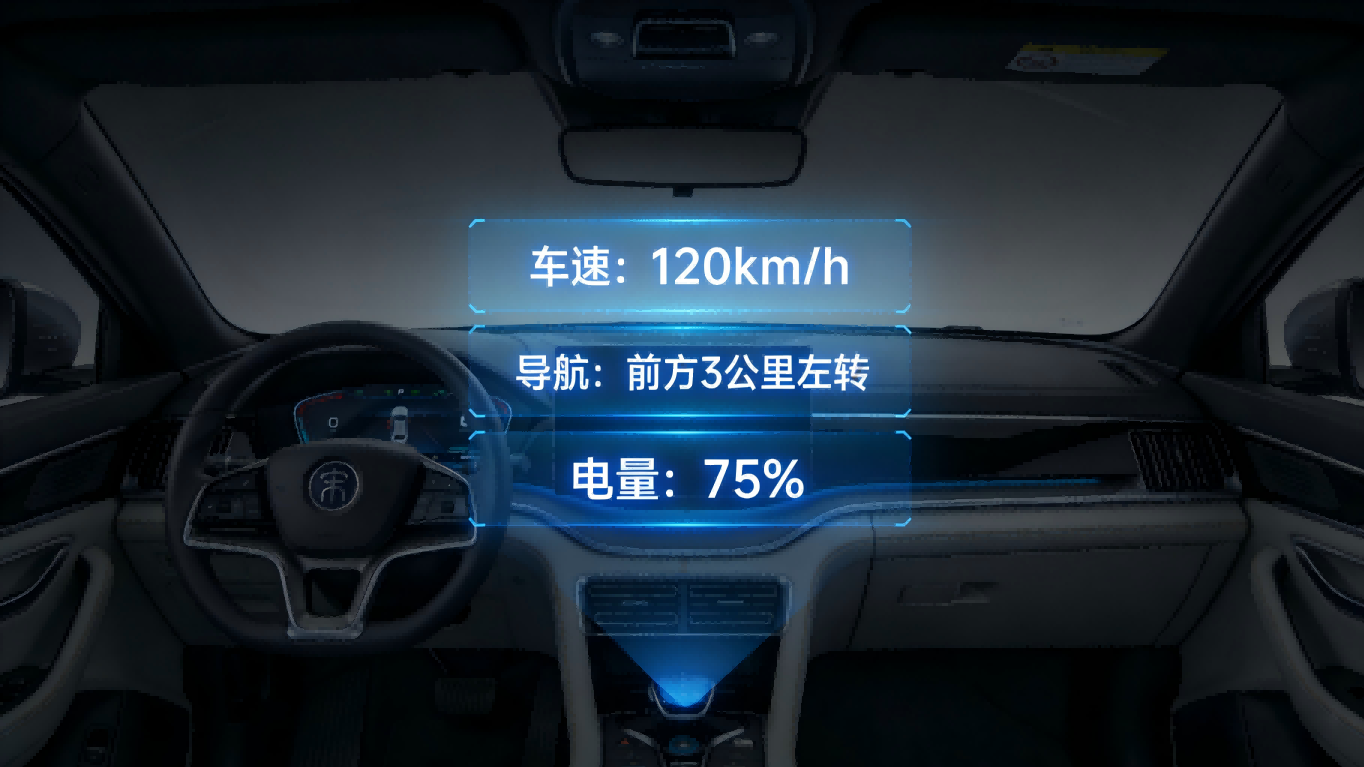
The EMC design of HUDs is a typical system-level problem, with challenges primarily stemming from three dimensions: signal integrity, power integrity, and spatial radiation. Modern HUDs commonly use LVDS or eDP interfaces to transmit high-resolution image data, with signal rates reaching several Gbps. These high-speed differential signals are extremely sensitive to common-mode noise; minor ground potential fluctuations or coupled noise can lead to image jitter or color distortion. Simultaneously, cables connecting the Picture Generation Unit (PGU) and the main control unit act like antennas, easily coupling radiated interference from in-vehicle CAN FD, FlexRay buses, or wireless modules, and may also introduce Electrostatic Discharge (ESD) shocks during personnel plugging/unplugging for debugging. The power supply network of the HUD is the cornerstone of its stability. According to ISO 7637-2 standards, various transient pulses exist on vehicle power lines, such as load dump pulses 5a/5b and inductive load switching pulses 1/2a/2b/3a/3b. For 12V systems, load dump pulse peak voltage can exceed 100V, lasting hundreds of milliseconds. If the HUD's DC-DC power modules and backlight drive circuits lack effective protection, these surge voltages can cause system resets at best, or directly damage power chips and display driver ICs at worst.
HUD assemblies are typically installed in the cramped space behind the instrument panel, adjacent to devices like the infotainment host and T-Box. Their internal high-speed digital circuits and switching power supplies are potential broadband noise sources, which may exceed limits through conduction or radiation, interfering with sensitive in-vehicle equipment like radios and GPS. Conversely, the HUD must also withstand Radiated RF Electromagnetic Field Immunity interference from external high-power transmitters (such as walkie-talkies, base stations) to prevent display content corruption. Solving the above challenges requires a coordinated protection strategy from ports to chips, from board-level to system-level, with its core lying in "channeling" and "isolation."
All external interfaces, including power input, video input, control buses (e.g., CAN, LIN), and debugging interfaces (e.g., USB), must deploy targeted filtering and protection circuits. For power ports, a two-stage architecture of "coarse protection + fine filtering" should be adopted. For high-speed signal ports, ultra-low capacitance TVS arrays should be selected to ensure signal integrity, while being paired with Common Mode Chokes (CMC) to suppress common-mode noise.
Good PCB design is the most cost-effective EMC measure. Key principles include: planning independent, single-point connected grounding areas for analog image processing circuits and digital logic circuits; providing a complete reference ground plane for high-speed differential traces and strictly controlling impedance; physically isolating noisy switching power supply circuits and using ferrite beads or shielding cans for local shielding; the layout of power supply decoupling capacitors should be as close as possible to the chip pins to form a low-impedance high-frequency noise return path.
5. Component Selection and Filtering
Refined Noise Management
At each power supply pin of the chip, combine large-capacity electrolytic capacitors, ceramic decoupling capacitors, and ferrite beads according to their noise spectrum characteristics; for critical global signals such as clock and reset, small resistors or ferrite beads can be connected in series to slow down edges and reduce high-frequency radiation; select ICs with good inherent EMC performance, such as DC-DC controllers with spread spectrum clock functionality, to reduce interference at the source.
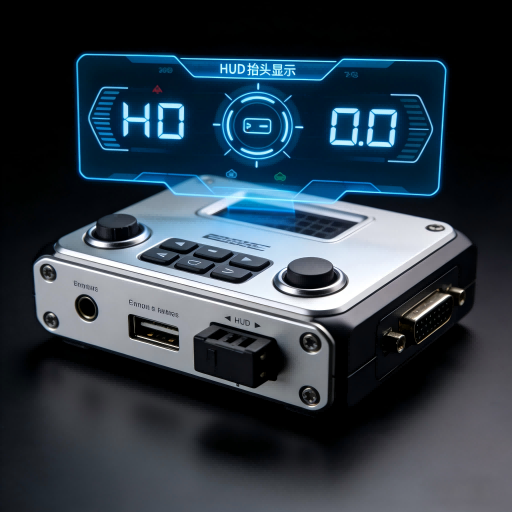
6. HUD Key Interface Protection Practical Selection Guide
For the typical application scenarios of HUD systems, a proven, cost-effective protection solution combination is crucial. Based on a deep understanding of automotive standards, Yinte Electronics provides a complete EMI+EMS solution covering all HUD interfaces, which can effectively help designs pass stringent tests such as ISO 7637, ISO 16750, and IEC 61000-4-2/5 on the first attempt.
1. 12V Main Power Input Port Protection
This is the first line of defense for the HUD system's survival. It is recommended to use the CMZ1211-501T high-current power ferrite bead as a front-end EMI filter. Its high impedance characteristics can effectively suppress conducted noise from vehicle wiring harnesses. For high-voltage surges such as load dump, a bidirectional TVS diode needs to be connected in parallel at the rear end for clamping protection. Depending on the system's withstand voltage margin, SM8K24CA or SM8K33CA can be selected. If space is extremely tight, surface-mount 5.0SMDJ24CA/33CA or SK56/SMC series are also excellent choices, as they can provide transient power absorption capability up to several kilowatts.
2. LVDS/eDP High-Speed Video Interface Protection
To ensure lossless transmission of ultra-high-definition images, ESD protection devices for video differential lines must have extremely low line capacitance (typically required).
3. In-Vehicle Network and Control Interface Protection
CAN/CAN FD buses used to receive vehicle speed and navigation information require simultaneous consideration of common-mode filtering and bus pin protection. It is recommended to use CML4532A-510T or CML3225A-101T as CAN bus common-mode chokes. For bus pin protection, it is recommended to use ESDLC3V3D3B (suitable for 3.3V domain controllers) or ESD24VAPB, which are optimized for automotive environments. For next-generation CAN FD or CAN XL networks, ESDCANFD24VAPB is recommended. Its optimized design ensures no bit errors are caused at higher communication rates.
4. Debugging and Data Interface Protection
USB Type-C or USB 2.0 interfaces used for production line programming or diagnostics face frequent plugging/unplugging ESD risks. It is recommended to use CMZ2012A-900T ferrite beads on data lines for high-frequency noise filtering. For ESD protection, multiple TVS arrays such as ESDSRVLC05-4 (four-channel), ESDLC5V0D3B, or ESD5V0D8BH can be flexibly selected based on the interface protocol and pin count. All of them provide robust IEC 61000-4-2 Level 4 protection.
5. Other Auxiliary Sensor and Audio Interfaces
For buttons or touchscreen interfaces used for brightness adjustment or user interaction, ESD5V0D8B can be used for ESD protection. For the vehicle audio input MIC port, which is sensitive to noise, it is recommended to use a TVS with low clamping voltage, such as ESD5V0D3, for protection.
Through the targeted device selection and circuit layout described above, the HUD system can establish a comprehensive electromagnetic protection network covering power supplies to signals and low-frequency to high-frequency ranges. This significantly enhances its robustness and reliability in complex vehicle electromagnetic environments, providing stable and clear visual information presentation for the intelligent cockpit.
References
ISO 7637-2, ISO 16750-2, IEC 61000-4-2, IEC 61000-4-5, SAE J1757, ISO 11452
 Hot News


 沪公网安备31011702889749号