


 Global









Modern endoscope systems, particularly electronic endoscopes (ES), are highly integrated, incorporating high-definition CMOS image sensors, high-brightness LED light sources, high-speed data interfaces, and precision motor drive units. These systems operate in complex electromagnetic environments such as operating rooms, facing direct threats from various strong electromagnetic interference sources including high-frequency electrosurgical units, defibrillators, and wireless devices. Concurrently, the coexistence of high-speed digital circuits and analog video signals within the system itself creates a potential source of interference. Therefore, electromagnetic compatibility (EMC) design has transitioned from a past "optional" consideration to a "mandatory" requirement concerning equipment reliability, image quality, and even surgical safety. Any image flickering, noise, or control failure caused by ESD (electrostatic discharge) or conducted/radiated interference could be catastrophic during a surgical procedure.
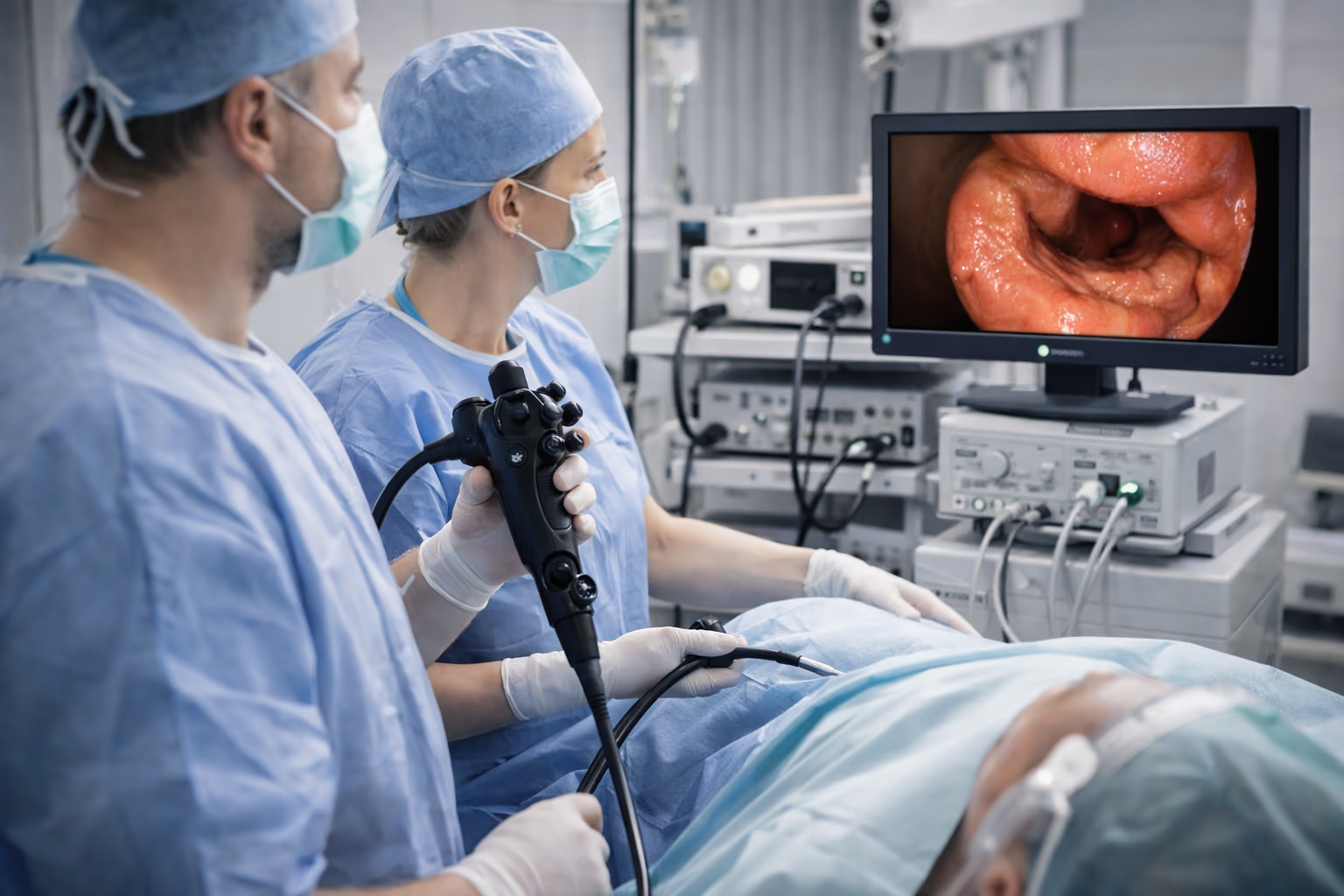
First, Analysis of Core EMC Pain Points in Endoscope Systems
R&D engineers face three main challenges when designing endoscope systems:
Challenge 1: The conflict between signal integrity and protection capability. The imaging data lines (e.g., LVDS, MIPI CSI-2) and video output interfaces (e.g., HDMI) of endoscopes operate at extremely high speeds, imposing stringent requirements on signal integrity. Traditional protection devices, due to their relatively large parasitic capacitance, can severely degrade the eye diagram of high-speed signals, leading to image blurring or transmission failure.
Challenge 2: Extremely limited space. The internal space of the endoscope, especially the scope body, is at a premium, requiring protection devices to be miniaturized and integrated. Traditional discrete protection solutions are difficult to implement.
Challenge 3: Stringent medical regulations and testing standards. The equipment must comply with medical device EMC standards such as IEC 60601-1-2, whose test levels are typically higher than those for consumer electronics. For example, ESD contact discharge needs to reach ±8kV, air discharge ±15kV, and there are strict regulations regarding system performance degradation under interference. Common failure modes include port burnout or latch-up of interface ICs due to surge or ESD, and image stripe noise caused by common-mode interference.
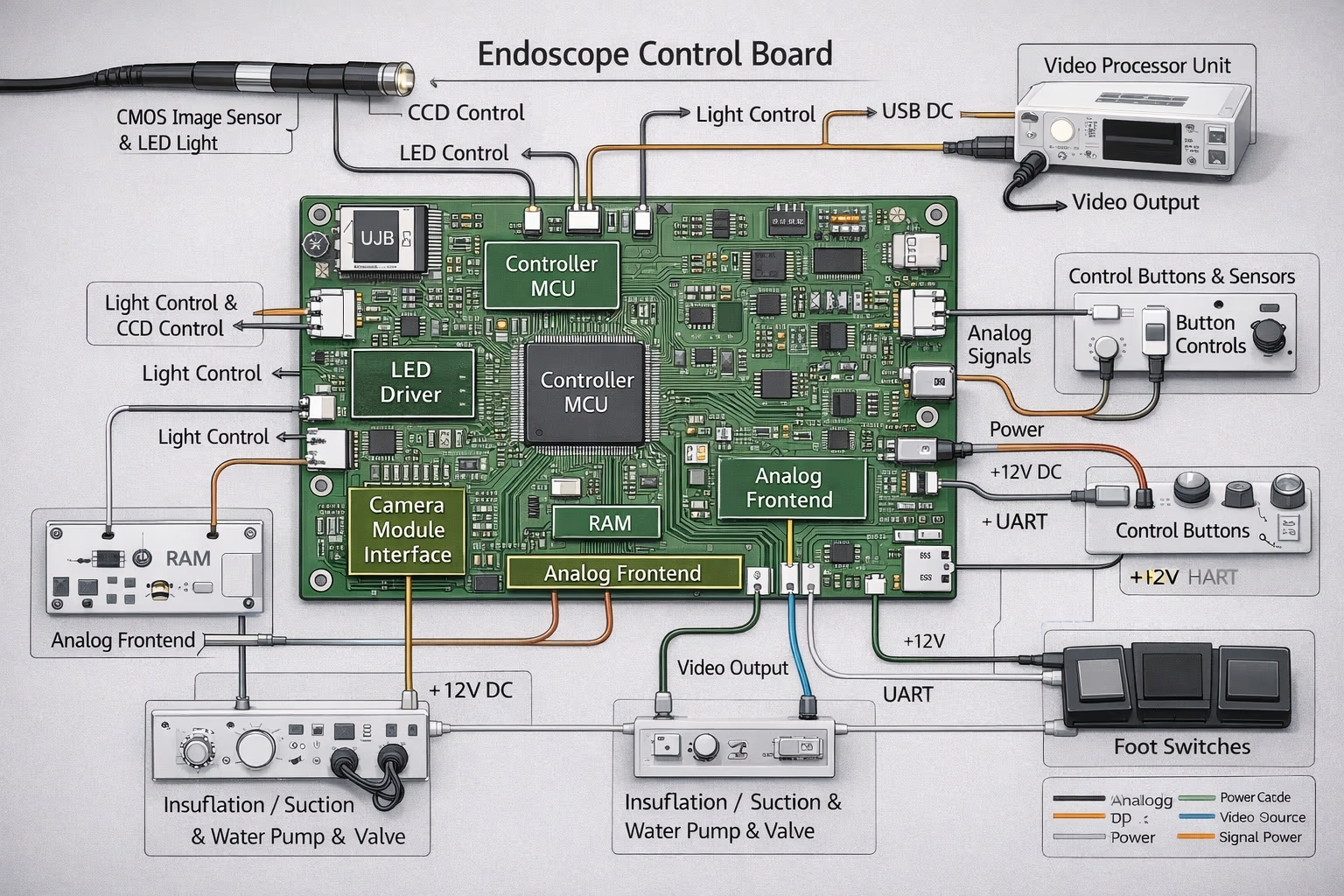
Second, Building a System-Level EMC Protection Strategy
Given the specific characteristics of endoscope systems, an effective protection strategy requires collaborative design across three aspects: port protection, PCB layout, and system grounding.
2.1 For port protection
a multi-stage protection philosophy of "lightning protection - filtering - precision clamping" should be adopted. For energy potentially introduced from the patient's body surface, the first stage should use devices capable of absorbing high energy for coarse protection.
2.2 High-frequency noise should be filtered out through filtering networks. Finally, fast-response, low-capacitance protection devices are used to clamp the voltage for the subsequent precision circuits. In PCB layout, digital ground, analog ground, and power ground must be strictly separated, and proper single-point connections should be used to avoid interference introduced by ground loops.
2.3 Protection devices for all interfaces should be placed as close to the ports as possible, ensuring that interference energy is effectively diverted before entering the internal board. For the system interior, key signals such as clocks and high-speed data lines should be handled with guard traces, and π-type filter circuits should be deployed at power entry points to suppress power supply noise.
Third, Recommended Typical Protection Solutions for Endoscopes
Addressing the aforementioned challenges, YINT, based on extensive experience in medical equipment protection, provides a series of high-reliability, miniaturized solutions.
For high-speed video data interfaces such as HDMI or LVDS signal lines, the key requirement is extremely low parasitic capacitance. The CMZ2012A-900T series common mode choke is recommended for EMI filtering. It can effectively suppress common-mode noise on high-speed differential signal lines while maintaining extremely low differential insertion loss, ensuring eye diagram quality. (Note: In the component selection library, the EMI filter recommended for HDMI scenarios is CMZ2012A-121T. CMZ2012A-900T is a general-purpose high-speed, low-capacitance solution suitable for various high-speed interfaces.)
On the EMS protection side, ESD protection devices with ultra-low capacitance must be selected. The NRESDLLC5V0D25B is an ideal choice, with a typical capacitance value of only 0.25pF, far below the capacitance tolerance of high-speed signal lines. It provides precise ESD clamping protection, ensuring signal integrity without distortion. For the USB Type-C interface of an endoscope, which integrates both data and power functions, protection needs to be more comprehensive. In addition to using the `CMZ2012A-900T` for signal filtering, its power pin (VBUS) is recommended to be protected using the `ESD30VD16`, which has a higher current handling capability. High-speed data lines are also suitable for ultra-low capacitance devices such as NRESDLLC5V0D25B or ESDULC5V0D8B.
For DC power lines within the system, such as 3.3V, 5V, and 12V power supplies for CMOS sensors or LED light sources, TVS diodes need to be placed at the power entry point for surge protection. For example, for a 5V power supply, ESD5V0D8B can be selected. For more sensitive 3.3V digital power supplies, the ESDLC3V3D3B with extremely fast response speed is recommended. It can suppress ESD while also handling some low-energy power transient pulses.
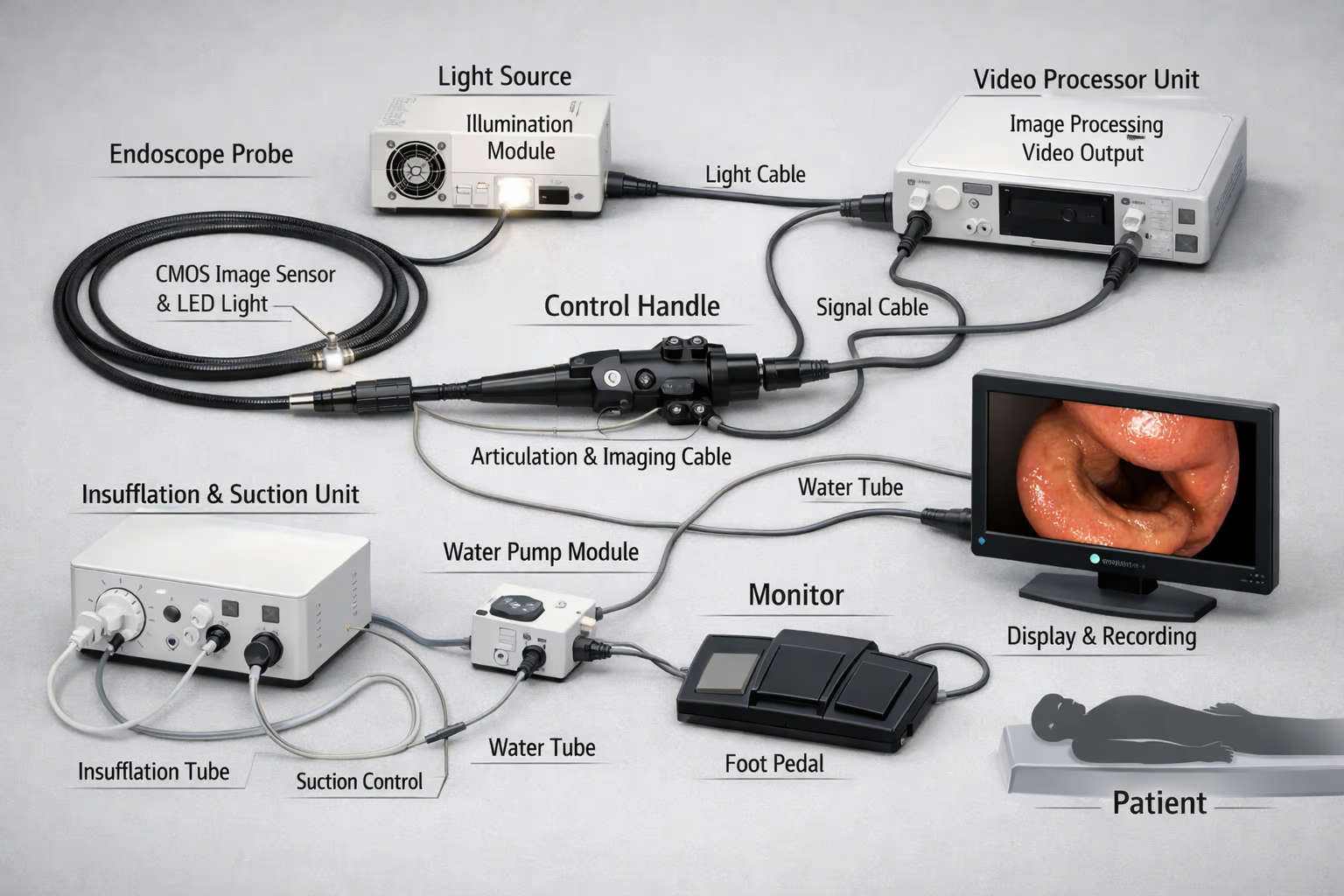
Fourth, Summary and Implementation Recommendations
The EMC design of an endoscope system is a systematic engineering process that runs throughout the product lifecycle. During the solution selection phase, priority should be given to suppliers like Yint Electronics, which can provide a complete suite from EMI filtering to EMS protection, to ensure component compatibility and the effectiveness of the protection chain. During the layout and routing stage, the principles of placing port protection devices as close as possible and ensuring complete isolation of critical signals must be followed. Finally, sufficient pre-compliance testing is crucial. It is recommended to conduct preliminary tests on key items such as ESD and EFT early in the R&D phase and adjust the protection scheme based on the test results. Only through coordinated protection at the component level, board level, and system level can a high-performance endoscope system that remains stable and reliable in complex electromagnetic environments be built.
 Hot News


 沪公网安备31011702889749号