


 Global









Abstract: The market status and design trends for the electromagnetic compatibility (EMC) design of EMG electromyography machines are undergoing profound changes. As core equipment for neuroelectrophysiological diagnosis, EMG machines are evolving from traditional fixed, highly integrated systems towards portability, wireless operation, and high-density acquisition. Manufacturers represented by Japan's Nihon Kohden, America's Natus, and Italy's OT Bioelettronica not only pursue microvolt-level signal acquisition accuracy but also regard system robustness in complex electromagnetic environments as a core competitive advantage. This trend directly stems from the expansion of clinical and research scenarios; equipment is no longer confined to well-shielded electrophysiology examination rooms but frequently appears in operating rooms, rehabilitation therapy rooms, and even outdoor sports fields.
Therefore, EMC design has evolved from a baseline requirement of "compliance with standards" to a top-level design element that determines product performance boundaries and market acceptance. The core contradiction lies in how to ensure the fidelity of extremely weak physiological signals (typically at the μV level) while resisting electromagnetic interference from the device's own switching power supplies, digital circuits, and the external environment (such as wireless devices, variable-frequency equipment), and ensuring the device itself does not become an interference source.
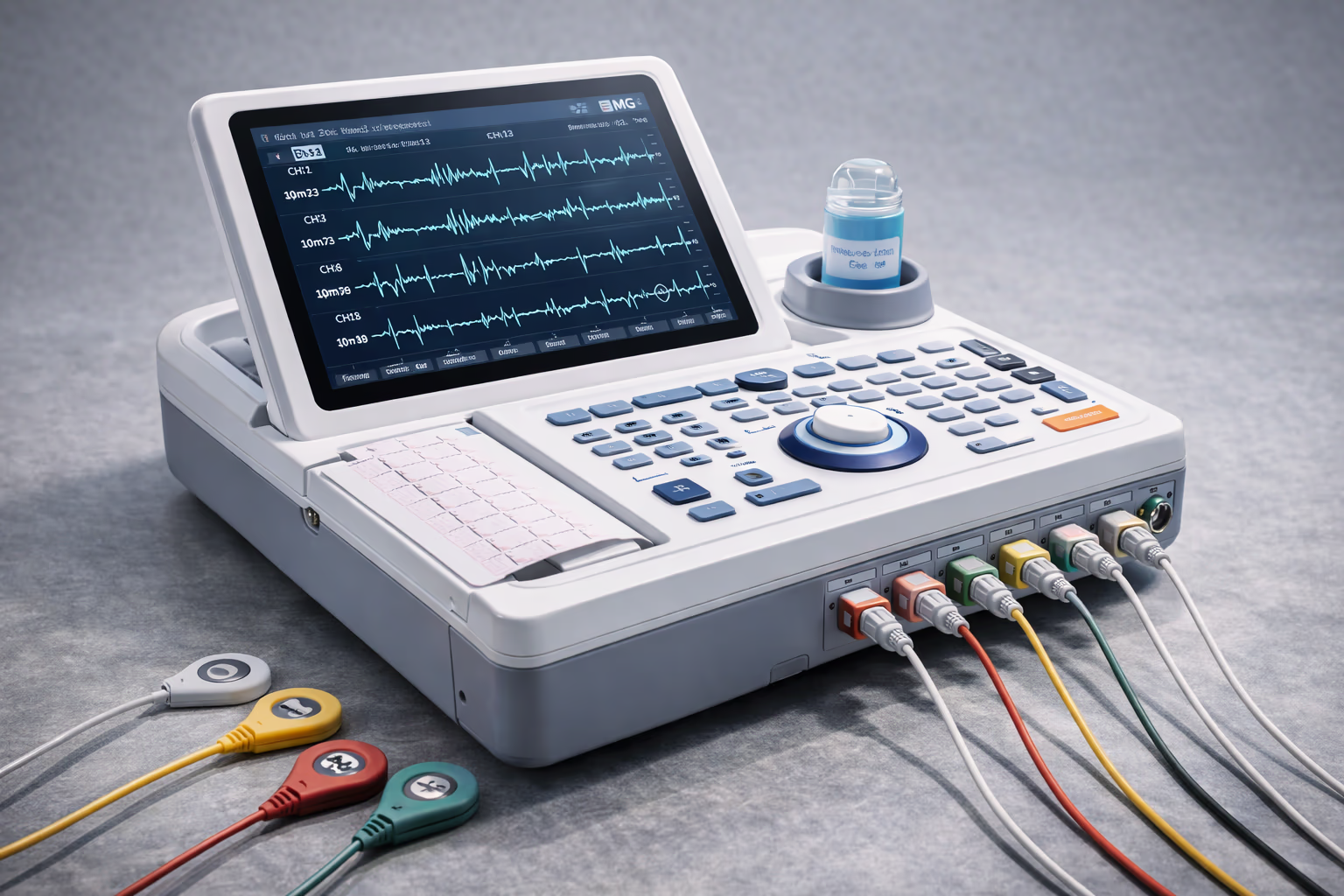
First, the EMC/ESD challenges faced by EMG machine R&D engineers are multidimensional and severe.
1.1 The extreme sensitivity of the signal chain is the primary challenge. EMG signals have small amplitude and rich frequency components (typically covering 10Hz to 10kHz). Any introduced common-mode or differential-mode noise can cause waveform distortion, affecting the interpretation of motor unit action potentials (MUAPs) and leading to clinical misdiagnosis.
1.2 The diversity and openness of interfaces introduce complex coupling paths. The device integrates high-impedance 1.5mm DIN electrode interfaces, high-speed USB/Ethernet data interfaces, BNC trigger interfaces for synchronization, and AC power interfaces. These ports act like "antennas," easily coupling radio frequency interference (RFI) from space or surges and electrostatic discharge (ESD) from conducted lines. Particularly, the electrode interface compliant with DIN 42802 standard, while its physical structure prevents accidental electric shock, also constitutes a direct channel for ESD injection.
1.3 Compliance testing itself is a difficulty
The device must simultaneously meet the stringent radiated emission and conducted emission limits in YY 9706.102-2021 (equivalent to IEC 60601-1-2), as well as immunity requirements such as electrical fast transient/burst (EFT), surge, and conducted susceptibility (CS) induced by RF fields. Failure in any test indicates a risk of device malfunction in real medical environments.
1.4 Achieving design balance is highly challenging
Adding filtering or protection devices at the electrode front-end may introduce additional parasitic capacitance, alter input impedance, leading to signal attenuation or loss of high-frequency components. Strengthening protection at power and data ports requires consideration of size, cost, and response speed.
Second, efficient circuit protection scheme design for EMG machines must follow a systematic, hierarchical principle.
Top-level design should start with the four major strategies of "Isolation, Filtering, Shielding, Grounding" for global planning. At the signal input stage, namely the 1.5mm DIN electrode interface, the protection focus is on preventing ESD damage to the preamplifier chip while avoiding noise introduction. Specialized protection devices with extremely low leakage current and extremely low parasitic capacitance should be used here to minimize impact on signal source impedance and bandwidth. For systems with built-in preamplifiers, decoupling and filtering networks need to be deployed at the amplifier power supply pins to suppress power supply noise.
For data transmission interfaces, such as USB, Ethernet RJ45, and HDMI, the core of protection is ensuring signal integrity. It is essential to select TVS diode arrays with ultra-low capacitance to ensure the eye diagram quality of high-speed data lines complies with specifications and to withstand transient voltages generated by hot-plugging of interfaces.
For the BNC interface used to trigger synchronization, it is necessary to simultaneously consider threats from electrostatic discharge (ESD) and induced surges from long cables. The power input terminal is the point where the highest energy interference is injected, requiring the construction of a multi-stage protection circuit.
The first stage employs Gas Discharge Tubes (GDT) or Metal Oxide Varistors (MOV) with high current-handling capacity to dissipate high-energy pulses such as lightning surges.
The second stage utilizes faster-reacting TVS diodes for clamping. Finally, combined with a π-type filter circuit, conducted emissions are suppressed. The entire device's metal enclosure should ensure good electrical continuity to achieve effective electromagnetic shielding and avoid ground loop interference through a single-point grounding strategy.
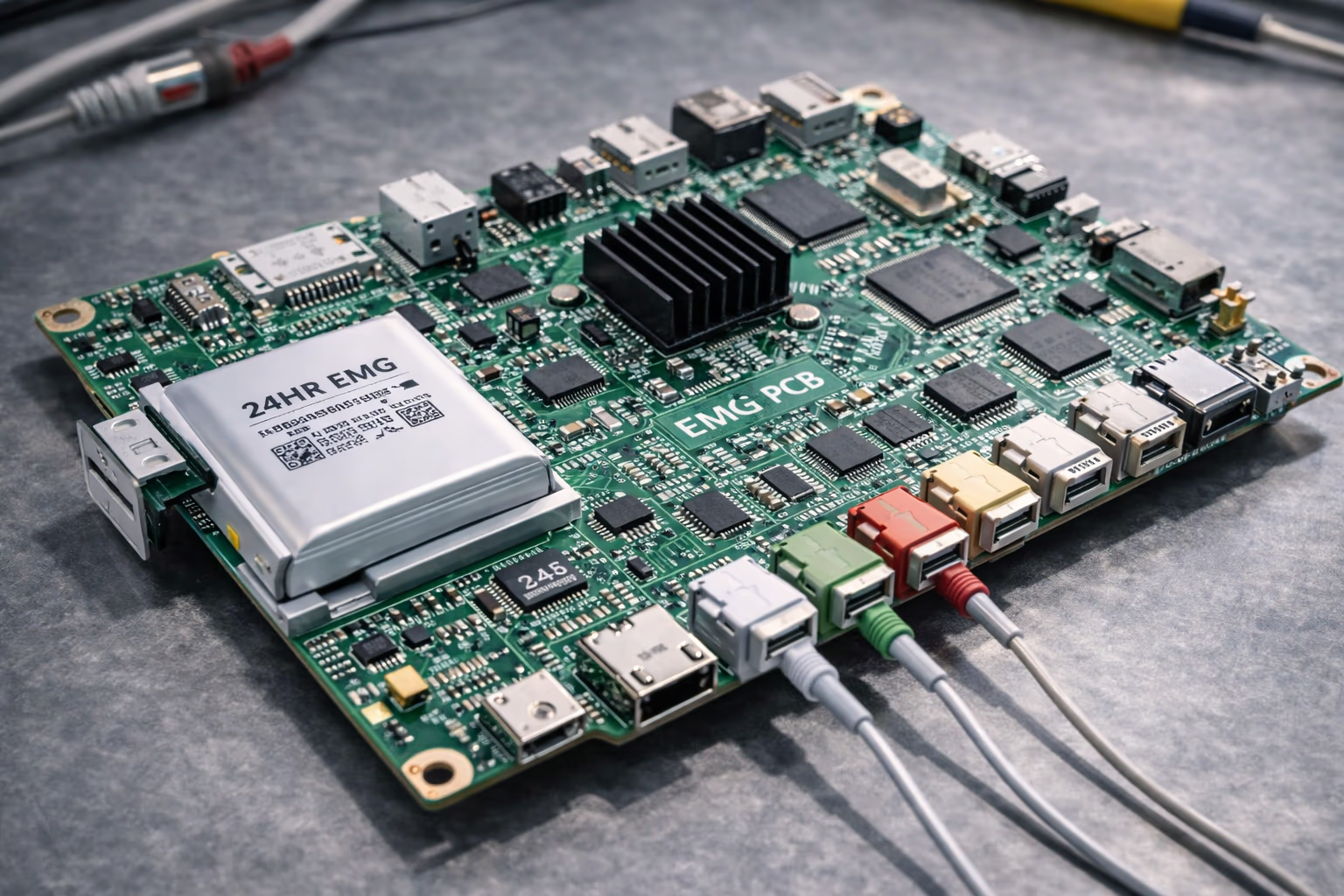
Third, addressing the demanding operating conditions of electromyography (EMG) machines.
Electrode Signal Interface
YINT's comprehensive protection solutions precisely address the aforementioned challenges. For the most critical electrode signal interface protection, it is recommended to use low-capacitance, low-leakage TVS diodes such as ESDLC5V0D3B or ESDLC5V0APB. These are specifically designed for high-impedance analog front-ends, with typical parasitic capacitance below 1 pF, ensuring no attenuation or phase shift for microvolt-level EMG signals. Simultaneously, they provide sensitive amplifier chips with a precise clamping voltage below 5V, meeting the IEC 61000-4-2 Level 4 ESD protection requirements.
Data and Communication Interfaces
USB Type-C and Ethernet ports are high-risk areas for interference. For the USB Type-C interface, the CMZ2012A-900T common mode choke is recommended to suppress common-mode noise on differential signal lines, paired with multi-channel, ultra-low capacitance TVS arrays like ESDULC5V0D8B or NRESDLLC5V0D25B for ESD protection. Their capacitance can be as low as 0.25 pF, perfectly ensuring data integrity for USB 3.0 and higher speeds.
Ethernet RJ45 Interface
For Gigabit Ethernet RJ45 interfaces, CMZ2012A-900T or CMZ4532A-900T can be selected for filtering, with ESDLC3V3D3B providing port protection.
In Terms of Power Management
The AC/DC power module and internal DC-DC converters of the EMG machine require focused protection. For the AC220V input port, a 20D561K varistor or a DA230-5K0-A dedicated lightning protection module can be selected as the primary surge protection. For internally generated power buses like DC12V and DC5V, TVS diodes from the SMBJ or SMCJ series should be selected according to the voltage level. For example, the DC12V line can use SMCJ15CA, while the core DC5V digital power supply can use SMBJ6.0CA for transient voltage suppression. Additionally, devices like ESD5V0D3B should be equipped for the power pins of board-level ICs.
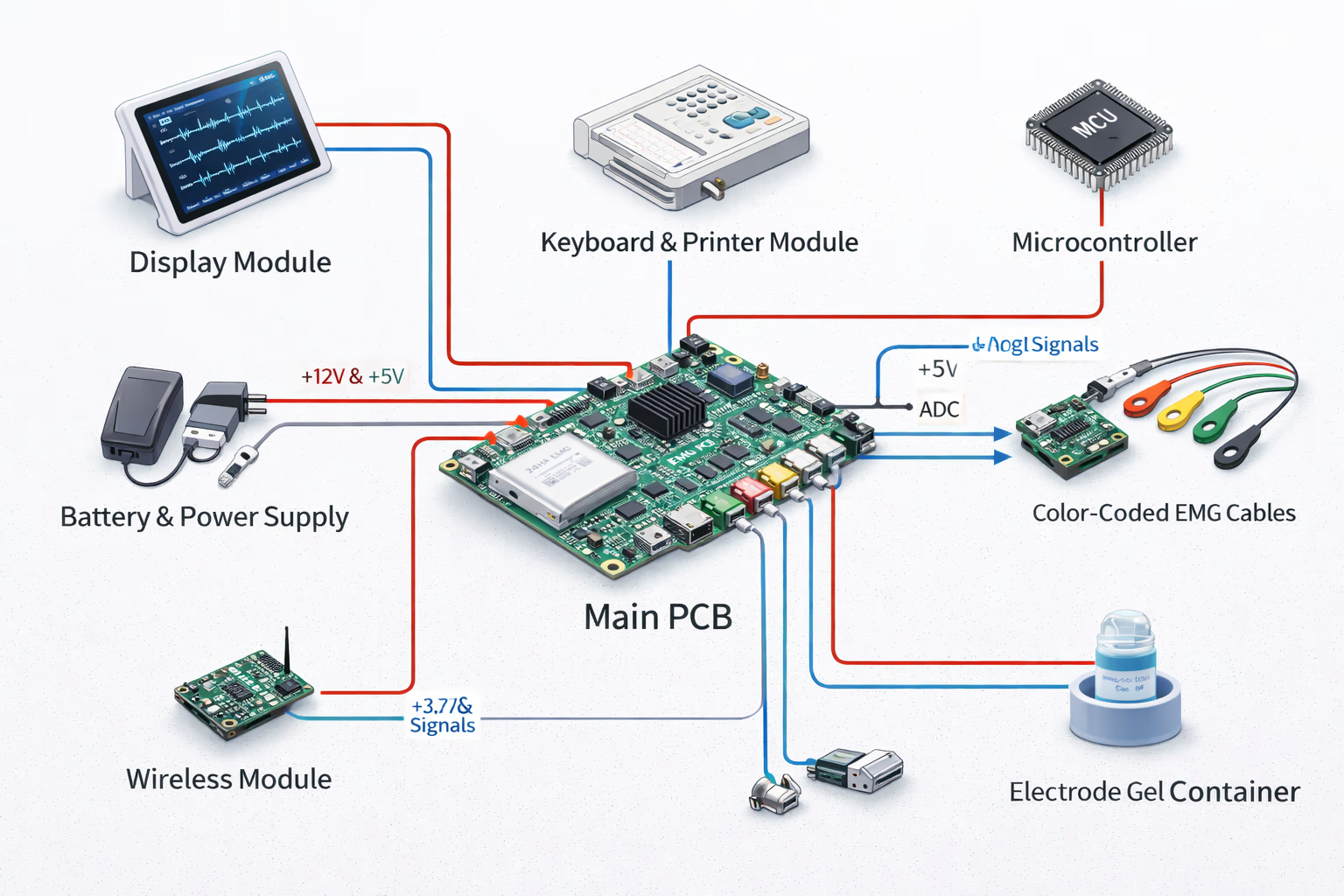
In Summary and Recommendations
The electromagnetic compatibility (EMC) design of an electromyography machine is a systematic engineering effort spanning product definition, circuit design, PCB layout, structural design, and test verification. Successful top-level design begins with a profound understanding of the application scenario and standard system and is achieved through meticulous protection strategies for each interface. During component selection, the key parameters of the devices (such as parasitic capacitance, clamping voltage, leakage current) must be strictly matched with the electrical characteristics of the signal chain (such as frequency, impedance, common-mode rejection ratio). It is recommended that R&D engineers introduce EMC design specifications early in the project and utilize a systematic approach to pass certification tests in one go, shorten the product time-to-market, and ultimately create a clinically reliable diagnostic device that is stable in any electromagnetic environment.
References: IEC 60601-2-40:2016, YY 9706.240-2021, YY 9706.102-2021, IEC 60601-1-2:2014, DIN 42802:1989.
 Hot News


 沪公网安备31011702889749号