


 Global








This is not merely a simple compliance issue, but a fundamental challenge concerning the core performance of the equipment and patient safety. Modern EEG machines have evolved from traditional multi-lead recorders into sophisticated medical electronic systems integrating high-gain amplifiers, digital signal processing, wireless transmission, and even AI-assisted diagnosis. Their front-end amplifiers need to detect microvolt-level (μV) weak EEG signals, with sensitivity far exceeding that of conventional electronic measurement equipment. Simultaneously, the hospital environment is filled with various sources of electromagnetic interference, such as high-frequency electrosurgical units in operating rooms, wireless paging systems in wards, mobile medical carts, and ubiquitous Wi-Fi and cellular network signals. This extremely high sensitivity and the complex electromagnetic environment create a sharp contradiction, making EMC design an unavoidable core issue in EEG machine development.
First, Unique EMC Challenges Faced by EEG Machines
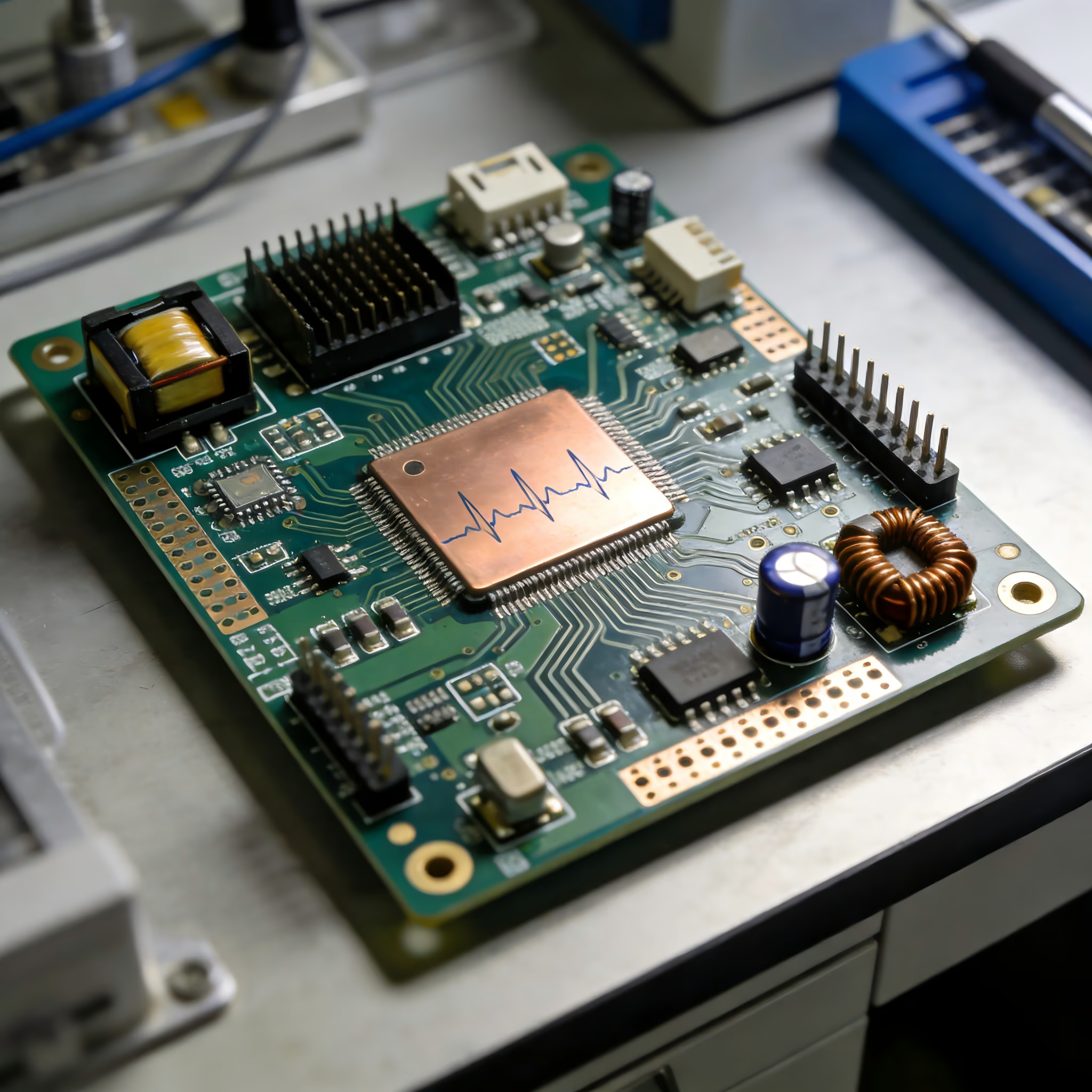
The electromagnetic compatibility issues for EEG machines are far more complex than those for consumer electronics or industrial equipment.
Challenge 1 lies in the extremely weak signal. The amplitude of EEG signals typically ranges from 10 microvolts to 100 microvolts, while the ever-present power frequency interference (50/60Hz) in the environment can be as strong as volts. This means the useful signal can be drowned in noise tens of thousands of times stronger.
Challenge 2 is the diversity of interference paths. Interference can not only conduct into the equipment through power lines but is more likely to couple directly into the high-impedance, high-gain front-end amplifier circuit through the electrode wires connecting the patient and the device, acting as an antenna.
Challenge 3 is that noise generated by the device's own digital circuits and switching power supplies can also crosstalk into the analog signal acquisition channel. Any oversight in design can lead to signal distortion, baseline drift, or the introduction of artifacts. In mild cases, it affects diagnostic accuracy; in severe cases, it can cause device false triggering or failure, potentially posing risks in critical applications like neurological monitoring.
Second, Key Failure Mechanisms and Design Blind Spots in Protection
Many R&D engineers often fall into several typical misconceptions when addressing EMC issues for EEG machines:
Misconception 1: Over-reliance on backend digital filtering while neglecting source suppression at the front end. Although digital algorithms can filter out specific frequency power line interference, for pulse-type disturbances like Electrostatic Discharge (ESD) or Electrical Fast Transient (EFT) bursts, their high-frequency components can directly cause front-end amplifier saturation or produce nonlinear distortion. This type of damage cannot be repaired by digital processing.
Misconception 2: Insufficient suppression of common-mode interference. Due to the distributed capacitance between the human body and ground, electric field interference in the environment induces a common-mode voltage on the body. If the amplifier's Common-Mode Rejection Ratio (CMRR) is not high enough, this interference will be converted into differential-mode noise at the output.
Misconception 3: Improper grounding strategy. Complex ground loops can introduce ground line noise, while floating ground designs may accumulate static electricity leading to discharge risks. These design blind spots pose severe challenges for equipment when facing tests like electrostatic discharge, radiated immunity, and conducted immunity under medical device EMC standards such as IEC 60601-1-2.
Third, Building a System-Level EEG Signal Integrity Protection Strategy
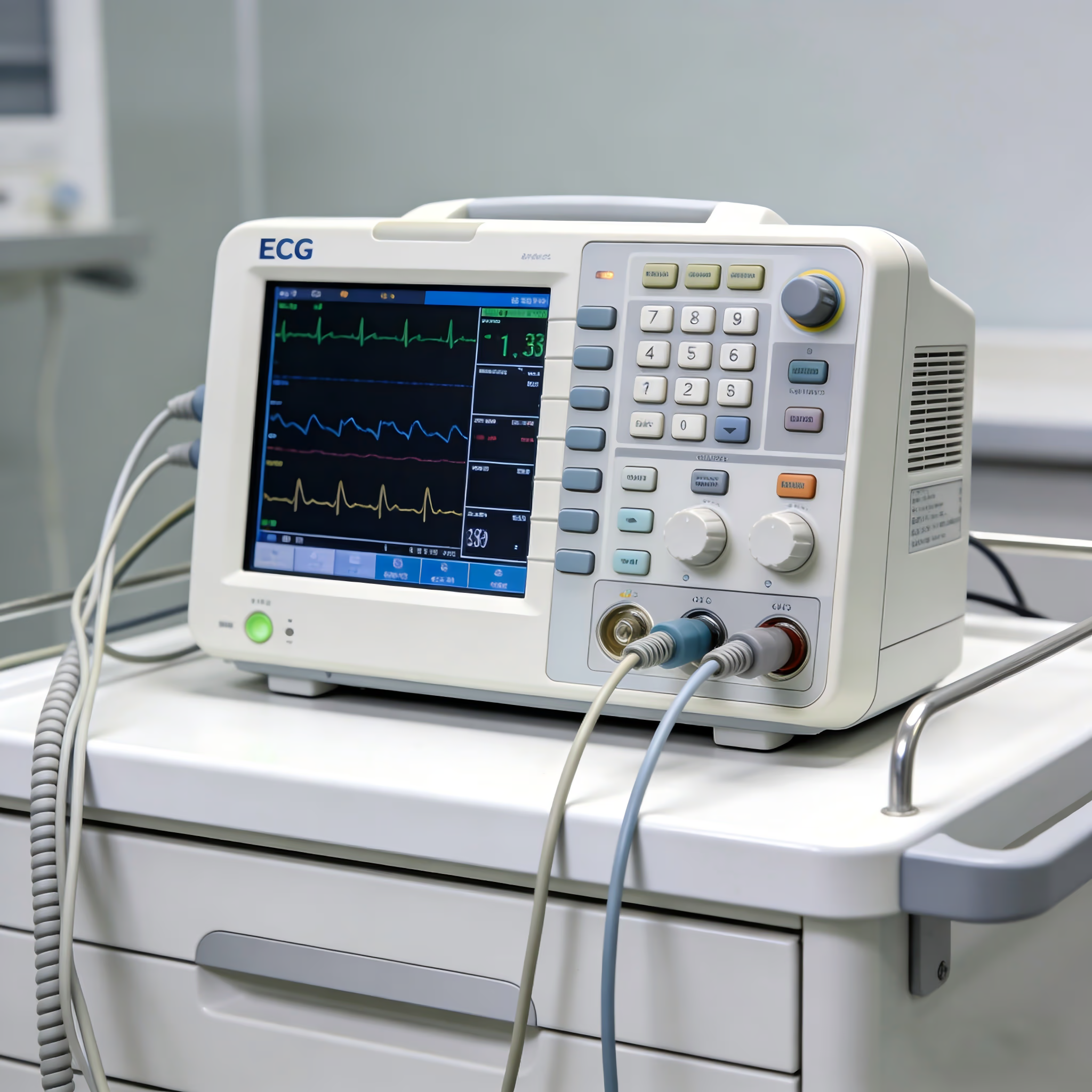
Solving the EMC problems of EEG machines requires adopting a system-level protection approach, following the classic principle of "Shielding - Filtering - Grounding," and refining it for medical scenarios. At the architectural level, strict physical isolation should be employed, partitioning the layout of the analog front end, digital circuits, and power supply modules, and using shielding enclosures for isolation.
Based on the aforementioned protection strategies, YINT Electronics provides validated, high-reliability protection solutions for the most critical signal input ports and internal power supplies of EEG machines. The core of these solutions lies in selecting components with extremely low parasitic capacitance and fast response characteristics, ensuring robust protection while minimizing the impact on microvolt-level EEG signals to a negligible degree.
For high-impedance analog input ports connected to electrodes, the direct threat is electrostatic discharge (ESD) caused by operators or the environment. To address this need, YINT Electronics recommends TVS diode arrays such as the ESD5V0D3B or ESDLC5V0D3B series. These devices feature ultra-low junction capacitance below 3 pF, ensuring distortion-free transmission of high-frequency EEG signal components. Their precise clamping voltage can rapidly shunt electrostatic shocks up to ±30 kV to ground, protecting downstream precision operational amplifiers from damage. For multi-channel designs, using multi-channel integrated protection devices like the ESDSRVLC05-4 can save PCB space and improve layout consistency.
Internally, low-voltage DC lines (e.g., ±5V, 3.3V) powering the analog front-end amplifiers require clean power. In addition to good PCB layout and decoupling, placing TVS diodes such as the ESD3V3D3B or ESD5V0D3B at the power supply pins can effectively suppress voltage spikes caused by internal digital circuit switching or external coupling, preventing power supply noise from modulating into the signal chain. For the device's main DC power input port (e.g., 12V adapter input), protection against more severe surge threats is required. It is recommended to use TVS diodes with higher current-handling capabilities, such as the SMBJ15CA or SMD2920-185-33V series. These devices can absorb higher-energy transient overvoltages, providing a robust first level of protection for the entire system.
The electromagnetic compatibility (EMC) design of EEG machines is a systematic engineering task that spans the entire product lifecycle. It begins with the initial architectural planning and permeates every circuit detail and PCB layout decision. Successful EMC design is not merely about passing tests; it is about consistently capturing pure and reliable EEG signals in real clinical electromagnetic environments over the long term. This requires engineers to deeply understand interference coupling paths and precisely select protection components, such as those provided by specialized companies, which are designed for high-sensitivity circuits. With the development of brain-computer interfaces (BCI) and mobile, wearable EEG devices, EMC challenges will become more severe, placing higher demands on the size, power consumption, and performance of protection components. Continuously monitoring and applying advanced circuit protection technologies and solutions is the cornerstone for ensuring the ongoing innovation and safe, reliable application of EEG machine technology.
 Hot News


 沪公网安备31011702889749号