


 Global








First: The EMC Challenges of Automotive Refrigerator Controllers
The Leap from Fridge, TV, and Sofa to Reliability
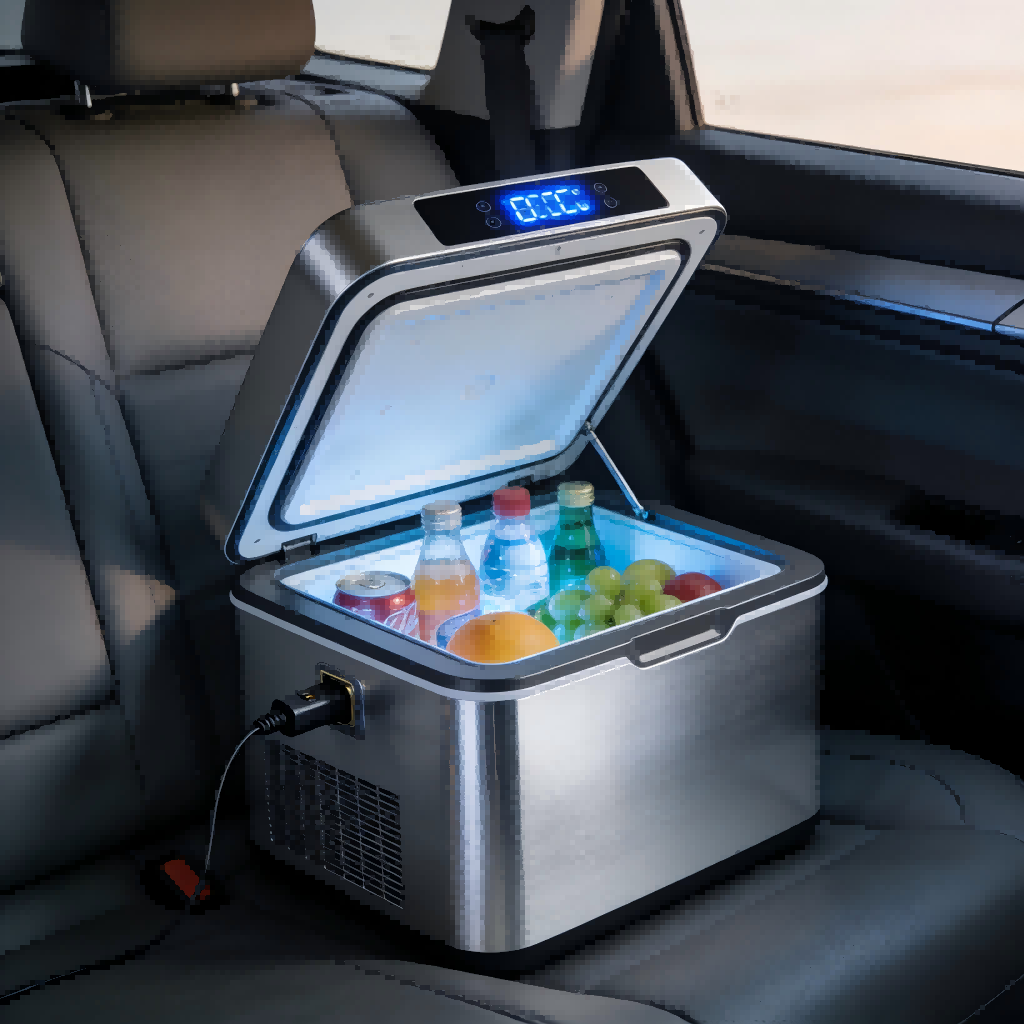
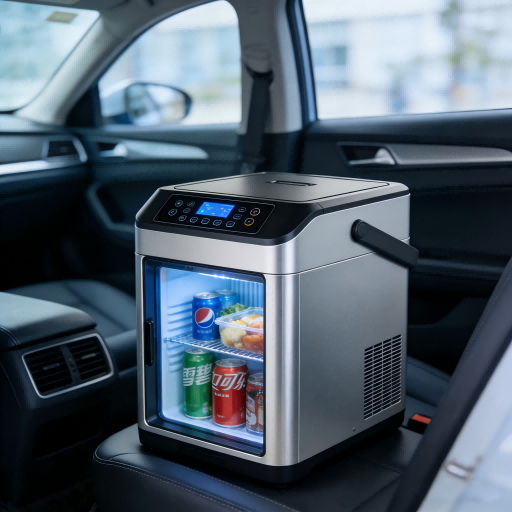
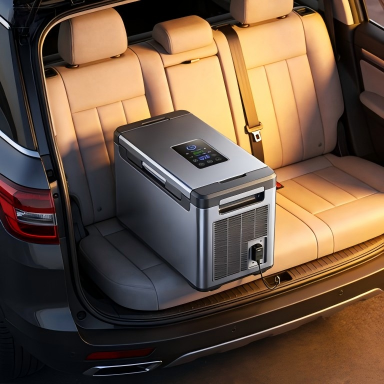
Driven by the wave of automotive intelligence and electrification, car refrigerators have gradually evolved from high-end optional features to standard equipment enhancing the driving experience. As the core brain, the controller must not only precisely manage compressor start/stop, temperature sensing, and user interaction but also operate stably in the harsh automotive electromagnetic environment. With the surge in the number of internal ECUs, the proliferation of 48V mild hybrid systems, and the frequent switching of high-power motors (such as compressors), the electromagnetic compatibility (EMC) challenges faced by controllers have escalated from "potential risks" to "design necessities." A minor ESD event or a transient pulse on the power line can lead to temperature control failure, display abnormalities, or even controller lockup, instantly turning the user's "cool experience" into the "boiling point" of system failure.
Second: In-depth Analysis of EMC Failure Mechanisms in Automotive Refrigerator Controllers
Automotive refrigerator controllers typically integrate MCUs, CAN/LIN communication interfaces, motor drive modules, switching power supplies, and various sensor interfaces. The root causes of their EMC issues are complex and can be primarily categorized as follows:
2.1 Coupling Paths of Conducted Interference
The compressor motor, as an inductive load, generates extremely high back electromotive force and current spikes during start/stop moments. This noise can be conducted through the power lines (12V/24V) to the internal DC-DC power supply of the controller, causing power rail fluctuations and interfering with the normal operation of the MCU and analog circuits. In severe cases, it may trigger latch-up effects leading to permanent damage.
2.2 Sensitive Loops for Radiated Interference
High-frequency clock signals, PWM drive signals, and their return paths on the controller PCB, if poorly designed, can form efficient antennas radiating noise outward. Simultaneously, these sensitive signal loops are highly susceptible to radiated interference from sources like car radios, GPS, or even adjacent ECUs, resulting in signal bit errors or sampling inaccuracies.
2.3 Direct Threat of Transient Pulses
The vehicle environment is filled with various pulses defined by standards like ISO 7637-2, such as load dump pulses (Pulse 5a/5b) generated by sudden load disconnection. Such high-voltage, high-energy pulses, if directly intruding into the controller's power port, are sufficient to instantly break down the primary protection devices and subsequent DC-DC converter chips.
2.4 Covert Damage from Electrostatic Discharge (ESD)
User operations via touchscreens or buttons, or maintenance personnel plugging/unplugging harnesses, can introduce ESD events as high as ±15kV (contact discharge). The discharge current can be directly injected into the controller's internals through I/O ports, causing gate oxide breakdown or thermal damage to chips manufactured in CMOS processes. This type of damage can be latent, leading to failure over time.
Third: Building a System-Level EMC Protection Strategy
To ensure the reliability of automotive refrigerator controllers throughout their entire lifecycle, a system-level protection approach must be adopted, following the hierarchical principle of "Protection first, then filtering, followed by optimization."
3.1 Port Protection and Energy Diversion
At the entry points of all external connection ports (power, communication, sensors, human-machine interface), deploy Transient Voltage Suppression (TVS) diodes or Metal Oxide Varistors (MOVs) to clamp high-voltage surges and divert most of the energy. This constitutes the first and most critical line of defense for protecting internal circuits.
3.2 Power Integrity Purification
Following the TVS at the power input, π-type or LC filter networks should be employed to filter out conducted noise. For LDOs or DC-DC converters powering the MCU, CAN transceivers, etc., decoupling capacitors should be placed close to their input and output terminals to form low-impedance local energy reservoirs, suppressing high-frequency noise.
For communication buses such as CAN/LIN, in addition to placing TVS diodes at the connector end for differential-mode protection, a common-mode choke (CMC) should be connected in series near the transceiver chip pins to suppress common-mode noise and enhance bus immunity. Simultaneously, small-capacitance TVS or ESD protection devices connected between the signal line and ground can effectively absorb ESD energy.
Implement proper zoning (high-power, low-power, digital, analog) to ensure sensitive signals are kept away from noise sources. Employ single-point grounding or hybrid grounding strategies to avoid ground loops. Critical signal traces should maintain a complete reference plane to shorten the return path.
Based on extensive automotive application experience from engineers, a series of market-validated EMI+EMS full protection solutions are provided for typical operating conditions of automotive refrigerator controllers, precisely matching the aforementioned protection strategies.
This is the most critical aspect of protection. A two-stage architecture of "coarse protection + fine filtering" is recommended.
4.1.1 First Stage (Coarse Protection/Energy Diversion)
For high-voltage pulses such as load dump, it is recommended to use TVS diodes like SM8K33CA or 5.0SMDJ33CA, which have a surge current capability of several hundred amperes, to clamp the pulse voltage to a safe range.
4.1.2 Second Stage (Filtering and Fine Protection)
After the TVS, use components like CMZ1211-501T (for 12V systems) or PBZ2012E600Z0T (for 24V systems) to construct a filtering network, effectively suppressing conducted noise. To further filter out high-frequency noise and provide secondary protection, specified components from the selection library such as SMBJ28CA or 1.5KE33CA can be selected.
Automotive refrigerator controllers often interact with the vehicle body network via CAN or LIN buses.
4.2.1 For the CAN bus
it is recommended to use common-mode chokes like CML4532A-510T or CML3225A-510T. Their excellent common-mode rejection ratio (CMRR) can significantly enhance the bus's immunity to common-mode interference. On the EMS protection side, the ESDLC3V3D3B is a low-capacitance, highly integrated TVS array that provides bidirectional protection (line-to-ground and line-to-line) for CAN_H and CAN_L, perfectly matching the 3.3V operating voltage of CAN transceivers.
4.2.2 For the LIN bus
components like CMLA4532A-510T paired with the dedicated ESD1524D3LIN protection device can be selected to provide robust protection for the single-wire LIN bus.
Low-speed digital I/Os for temperature sensors, lighting control, and key interfaces are common entry points for ESD.
4.3.1 For GPIOs with 3.3V or 5V logic levels
Yint's ESDLC5V0D3B (for 5V systems) and ESDLC3V3D3B (for 3.3V systems) are ideal choices. They feature ultra-small packages, extremely low clamping voltage, and low leakage current, effectively absorbing ESD strikes from both the Human Body Model (HBM) and Machine Model (MM), ensuring the safety of MCU I/O ports.
4.3.2 For key interfaces
multi-channel TVS arrays such as ESD5V0D5B or ESD5V0D8B can protect multiple key channels simultaneously, saving PCB space.
If the controller directly drives a compressor motor, connecting a TVS diode like the SMAJ48CA in parallel between the drain of the motor drive MOSFET (connected to the motor side) and ground can absorb voltage spikes generated by the motor's back electromotive force (back-EMF), protecting the MOSFET from breakdown.
In summary, through the targeted selection described above, Yint Electronics' solution can help design engineers construct a comprehensive protection network—from ports to chips, from power to signals—ensuring that the vehicle refrigerator controller easily passes stringent automotive-grade EMC tests such as ISO 7637, ISO 16750, and CISPR 25. This achieves a complete leap from "freezing point" stability to "boiling point" reliability.
References: ISO 7637-2, ISO 16750-2, CISPR 25, IEC 61000-4-2
 Hot News


 沪公网安备31011702889749号