


 Global









ESDSM712 is an asymmetric TVS Diode Array designed for protecting RS-485, Fieldbus, and Modbus interfaces. Its core function is not general low-voltage ESD protection, but rather targeted protection for the common -7 V to +12 V asymmetric operating window of RS-485. It absorbs ESD, EFT, and surge energy without significantly compressing the normal bus operating range, making it suitable as a front-end protection device for RS-485 A/B bus lines.
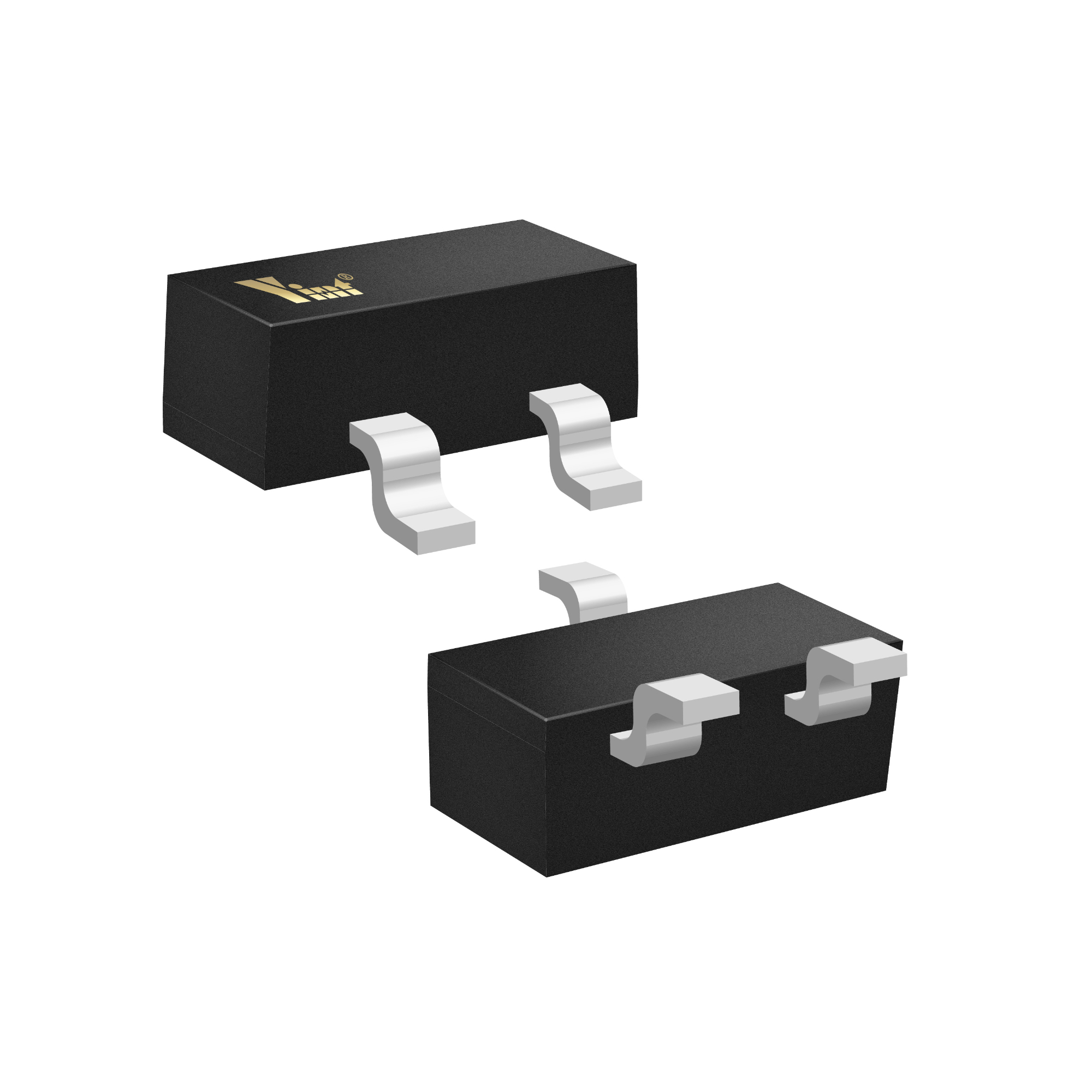
Device Type: TVS Diode Array
Package: SOT-23
Application Positioning: RS-485 / Fieldbus / Modbus
Key Point: Used to protect RS-485 applications with -7 V to 12 V asymmetric operating voltage against damage from ESD, EFT, and lightning-induced surges.
IEC 61000-4-2 Air discharge: ±30 kV
IEC 61000-4-2 Contact discharge: ±30 kV
Peak Pulse Power (8/20 μs): 400 W
Response time: typically
Operating Temperature Range: -55 °C to +125 °C
Storage Temperature Range: -55 °C to +150 °C
The core of the ESDSM712 lies in: the forward direction is designed with a 12V working window, and the reverse direction is designed with a -7V working window; therefore, it is not a simple symmetrical protection device, but a product tailored to the common asymmetrical common-mode working boundaries of the RS-485 bus.
From the device type "TVS DIODE ARRAY" and the description of electrical parameters, it can be confirmed that this is an array-type protection device suitable for dual-line interface scenarios, and is particularly well-suited for A/B dual-line buses such as RS-485.
If a common symmetrical TVS is used directly, two types of problems may arise: under normal bus swing, the protection device may intervene prematurely; when a real anomaly occurs, the protection window is not sufficiently aligned with the RS-485 interface boundary. The significance of the ESDSM712 lies in preserving the normal operating window of RS-485 as much as possible, while promptly clamping abnormal stress, making it more suitable for front-end protection of industrial bus interfaces.
RS-485 is not a simple 3.3V / 5V logic interface; it faces: long lines, multiple nodes, ground potential differences, hot-swapping, EFT / surge / ESD, and wiring uncertainties in industrial environments. The normal common-mode operating range of many RS-485 chips itself approaches an asymmetric window like `-7 V ~ +12 V`; therefore, the product logic of the ESDSM712 is not to increase the TVS voltage, but to make the protection window as close as possible to the normal operating boundary of RS-485. This is also the most fundamental difference between it and general-purpose ESD protection diodes.
RS-485 interfaces are susceptible to damage from electrostatic discharge (ESD) or electrical fast transient (EFT) surges
Field ground potential differences and long cable runs impose stress on the interface
General-purpose TVS diodes do not match the RS-485 operating window
Insufficient EMC margin leads to high field repair risk
Dual-line array protection structure
±30 kV IEC ESD capability
Simultaneously covers ESD, EFT, and surge risks
Reducing the risk of interface chip damage
Protection window closer to the RS-485 electrical boundary
Easier to avoid premature interference while providing effective protection compared to general-purpose symmetric TVS
 Hot News


 沪公网安备31011702889749号